


Spain and France led the world cup odds to win 2026 in the June 2 pre-tournament market published by Sports Illustrated, followed by England and Brazil.
That snapshot placed Spain at +420 and France at +460, showing a relatively narrow gap between the leading contenders. This article compares those historical prices and the football evidence behind them; the figures are not live odds.
Instant Topic Verdict
- Leading pair: Spain and France occupied the top two positions in the selected market.
- Closest challengers: England and Brazil followed, ahead of Portugal and Argentina.
- Longer route: The expanded format required the eventual champion to play eight matches.
- Important distinction: A favorite has the shortest price, not a guaranteed—or necessarily greater than 50%—chance of winning.
World Cup 2026 Winner Odds: A Dated Comparison
The table uses FanDuel odds reported by Sports Illustrated on June 2, 2026. Keeping one bookmaker and publication date makes the comparison more consistent than combining prices from different stages of the tournament.
Decimal odds and implied probabilities below are calculated from the reported American prices.
| Team | American odds | Decimal odds | Implied probability |
|---|---|---|---|
| Spain | +420 | 5.20 | 19.23% |
| France | +460 | 5.60 | 17.86% |
| England | +650 | 7.50 | 13.33% |
| Brazil | +850 | 9.50 | 10.53% |
| Portugal | +1000 | 11.00 | 9.09% |
| Argentina | +1000 | 11.00 | 9.09% |
| Germany | +1300 | 14.00 | 7.14% |
| Netherlands | +1600 | 17.00 | 5.88% |
Historical prices: Sports Illustrated/FanDuel, June 2, 2026. Percentages are unadjusted implied probabilities, rounded to two decimal places
These percentages represent what the prices imply mathematically. They are not independently measured probabilities of each team winning.
How to Read World Cup Outright Odds
An outright market concerns the eventual tournament winner, rather than the result of an individual match.
For positive American odds, the implied probability is:
100 ÷ (American odds + 100) × 100
For example, +420 converts to approximately 19.23%. Decimal odds of 5.20 express the same price.
Bookmakers include a margin in their markets, so the implied probabilities across all teams typically total more than 100%. A fair-probability comparison would need to account for that margin.
This explains an easily missed point: the strongest individual contender can still be much less likely to win than the rest of the field combined. “Favorite” describes a team’s position relative to its rivals, not certainty.
Why Spain Had a Strong Football Case
Spain’s EURO 2024 performance provided substantial evidence for treating them as a leading contender. UEFA records seven victories from seven matches and 15 goals, while its historical statistics list ten different Spanish scorers during the tournament.
That scoring spread matters analytically. A team with several credible goal threats gives opponents more problems than one dependent on a single finisher.
The final against England offered a concrete example of Spain’s attacking variety. Lamine Yamal created Nico Williams’s opening goal, while Marc Cucurella supplied the cross for Mikel Oyarzabal’s late winner in a 2–1 victory.
The tactical interpretation is that Spain could turn width into decisive chances through different combinations. Their earlier success supported optimism, although it could not establish how effectively those patterns would transfer to every World Cup opponent.
Why France Belonged Near the Front
France brought a different kind of evidence: consecutive World Cup final appearances, winning in 2018 and finishing runners-up in 2022. In Qatar, Kylian Mbappé scored eight goals, including a hat-trick in the final against Argentina.
Those numbers demonstrated both individual scoring power and experience of progressing through the tournament’s decisive rounds.
There was also a useful caution in that final. France recovered from 2–0 and 3–2 deficits but still lost the penalty shootout after a 3–3 draw. Their ability to rescue a difficult match was exceptional; needing that rescue also showed that elite attacking talent does not eliminate defensive vulnerability.
For a pre-tournament assessment, France’s recent World Cup record was compelling evidence, rather than a promise that another final would follow.
England: Attacking Options and a Control Question
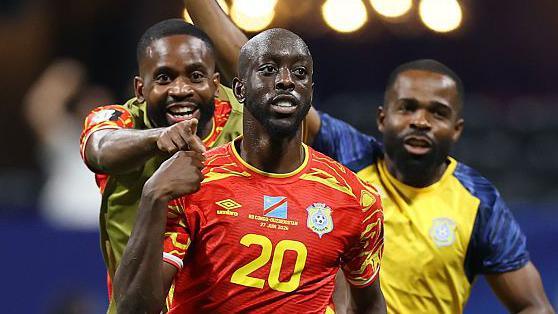
England’s EURO 2024 final appearance supported their status as a serious challenger. Against Spain, Bukayo Saka and Jude Bellingham contributed to the move finished by substitute Cole Palmer for the equalizer.
However, UEFA also recorded that England conceded first in all four knockout matches at that competition.
The analytical concern was therefore control. Recovering from setbacks demonstrates resilience, but repeatedly chasing matches leaves less room for a missed chance, a defensive mistake or an opponent capable of slowing the game.
A convincing assessment of England needed to consider how reliably they could create opportunities before falling behind, alongside the quality of their attacking players.
Argentina: The Defending Champions’ Case
Argentina entered the 2026 tournament as defending champions after defeating France in the 2022 final. Lionel Messi scored twice, Ángel Di María also scored, and Argentina won the shootout 4–2 after extra time ended level.
That victory supplied evidence of performance under extreme pressure. It also illustrated why tournament assessments should consider more than conventional attacking output: extra time and penalties can determine the champion.
Nevertheless, a previous title cannot settle a later forecast. The relevant questions include player availability, the balance of the selected team and whether its earlier strengths remain effective against a different draw.
Brazil, Portugal and the Chasing Group
An odds table establishes how a market orders teams; it does not, by itself, explain every position.
For Brazil, Portugal, Germany and the Netherlands, a sound football assessment would examine the same practical questions:
- Can the team create chances against a compact defense?
- Does its midfield protect the space behind attacking players?
- Are replacements available for key roles?
- Can it change approach when the first plan fails?
These are evaluation criteria, rather than claims that any particular side had solved every problem. Reputation alone is insufficient evidence of tournament readiness.
Similarly, a longer price should not automatically be called “value.” That judgment requires a defensible probability estimate and a comparison with the available odds.
Why the Expanded Format Mattered
FIFA’s 2026 format increased the field to 48 teams and added a round of 32. The champions’ route therefore involved eight games, compared with seven in 2022.
The analytical implication was an additional knockout hurdle. Squad depth, recovery and the ability to replace an unavailable starter deserved attention alongside the strongest starting lineup.
The extra match did not automatically favor a particular nation. It did make assessments based only on star players less complete: a tournament squad needs solutions across several matches and changing game situations.
FAQs
Q1. Who was the favorite to win the 2026 World Cup before kickoff?
Spain led the June 2, 2026 FanDuel snapshot reported by Sports Illustrated, with France second. The answer depends on the bookmaker and date being compared.
Q2. Are implied probabilities the same as a team’s true winning chances?
No. They are mathematical conversions of betting prices. They include the effect of bookmaker margin and should not be treated as independently verified forecasts.
Q3. Are these World Cup odds still available?
This article presents a historical pre-tournament comparison, not an available betting market. The date attached to each price is essential to interpreting it correctly.
Conclusion
Spain’s European Championship performance and France’s recent World Cup record gave their pre-tournament cases substance. England’s resilience and Argentina’s championship experience supplied different reasons to take their challenges seriously.
The useful next step when evaluating these historical forecasts is to compare them with subsequent performances while preserving the original date and evidence. A successful prediction does not prove that victory was inevitable, just as one elimination does not automatically make the original assessment unreasonable.
