


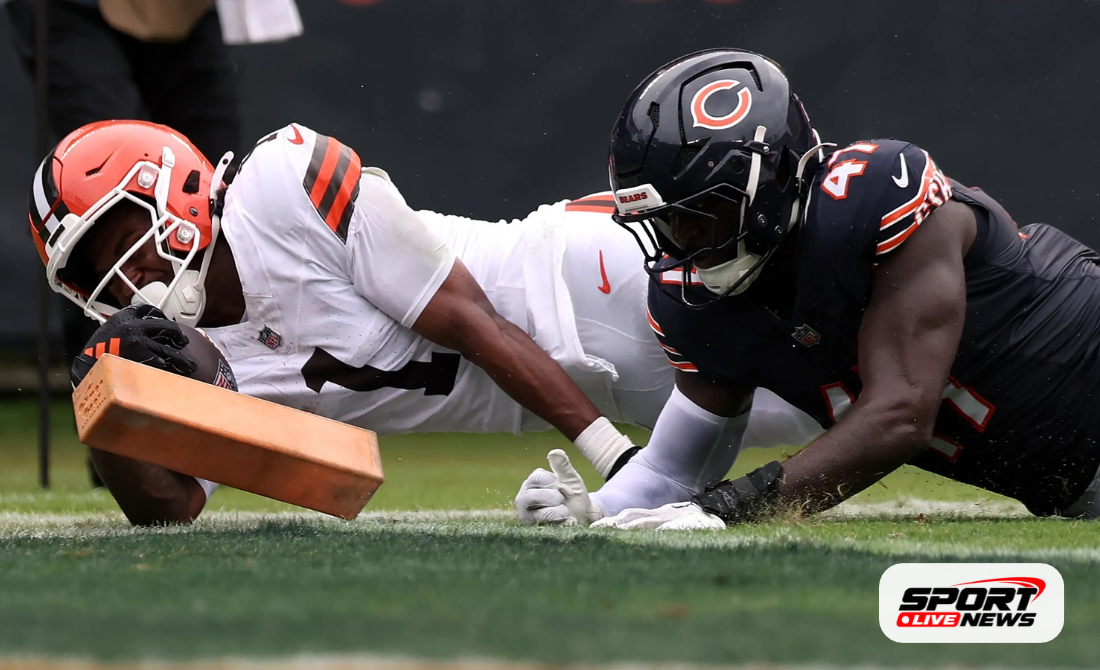
The Chicago Bears defeated the Cleveland Browns 34–10 at Soldier Field on August 15, 2026, scoring 34 consecutive points after falling behind early. The bears vs browns preseason opener swung decisively toward Chicago after halftime, when Case Keenum threw two touchdown passes. With Caleb Williams and most Bears starters sitting out, the result offered an encouraging look at Chicago’s depth rather than a full-strength comparison between the teams.
Instant Topic Verdict
- Final score: Chicago Bears 34, Cleveland Browns 10.
- Decisive stretch: Chicago won the second half 24–0 after a tied first half.
- Standout quarterback: Case Keenum completed nine of 10 passes for 151 yards and two touchdowns.
- Defensive difference: Chicago forced three turnovers and kept Cleveland scoreless over its final nine possessions.
Bears vs Browns Score by Quarter
Cleveland controlled the opening stages, but Chicago erased the deficit before halftime and pulled away in the third quarter.
| Team | First quarter | Second quarter | Third quarter | Fourth quarter | Final |
|---|---|---|---|---|---|
| Cleveland Browns | 3 | 7 | 0 | 0 | 10 |
| Chicago Bears | 0 | 10 | 14 | 10 | 34 |
The scoring pattern matters: this was a competitive game at the break, followed by a second half in which Cleveland could neither answer Chicago’s touchdowns nor produce points of its own.
How Cleveland Built Its Early Lead
The Browns initially combined useful field position with explosive plays. KC Concepcion’s 31-yard punt return helped set up an opening scoring possession, which Andre Szmyt finished with a 50-yard field goal.
Cleveland then moved into scoring position with help from Dylan Sampson’s 43-yard gain on a delayed screen. Concepcion finished the drive with a 14-yard touchdown run early in the second quarter, extending the advantage to 10–0.
Those plays illustrated the value of getting the ball to runners in space. A screen is a short pass designed to let blockers develop ahead of the receiver; its success depends on what happens after the catch as much as the throw itself. Cleveland used that approach effectively before its offense stalled.
The Turning Point: Chicago Turned a Takeaway Into Points

Jamree Kromah supplied the defensive intervention Chicago needed. He stripped Deshaun Watson during a sack and recovered the football, ending a Browns possession and giving the Bears an opportunity to reduce the deficit.
Chicago made that opportunity count. Roschon Johnson converted third-and-three with a 19-yard run before Tyson Bagent found Maurice Alexander for a 25-yard touchdown.
That sequence changed the pressure on both teams. Cleveland lost the chance to extend its lead, while Chicago turned a defensive play into seven points rather than merely improved field position.
Cairo Santos then made a 51-yard field goal as the first half expired, sending the teams into the locker room level at 10–10.
Quarterback Stats: Keenum Made the Biggest Impact
The quarterback performances provided different kinds of evidence. Bagent helped Chicago recover, Keenum accelerated the comeback, and Watson’s productive opening was undermined by a lost fumble.
| Quarterback | Team | Completions/attempts | Passing yards | Passing touchdowns | Interceptions |
|---|---|---|---|---|---|
| Tyson Bagent | Bears | 13/22 | 169 | 1 | 1 |
| Case Keenum | Bears | 9/10 | 151 | 2 | 0 |
| Deshaun Watson | Browns | 11/15 | 126 | 0 | 0 |
| Shedeur Sanders | Browns | 6/11 | 79 | 0 | 1 |
Watson’s interception-free line should not be confused with a turnover-free performance: his fumble was a significant moment in Chicago’s recovery. Sanders also struggled to translate his passing yardage into points after taking over.
For another look at Chicago’s quarterback performances, explore our Minnesota Vikings vs Chicago Bears match player stats.
Why Keenum’s Numbers Were So Effective
Keenum’s 151 yards came on only 10 attempts, an average of 15.1 yards per attempt. He finished with a 158.3 passer rating, the maximum under the NFL formula.
His touchdown passes went to running backs Salvon Ahmed and Brittain Brown, from 49 and six yards respectively. Those scores turned the halftime tie into a 24–10 advantage.
The interpretation needs some restraint. Keenum delivered an excellent short appearance, but a preseason quarter against changing personnel cannot establish how an offense will perform across a regular season. It does show that Chicago’s reserve unit converted its opportunities efficiently.
Why Chicago’s Screen Game Mattered
Ahmed’s touchdown demonstrated why passing yardage is a shared achievement. He caught a screen, broke two tackles and changed direction across the field on his way to the end zone.
The tactical value came from combining a manageable throw with blocking and running after the catch. Chicago did not need a deep completion to produce an explosive touchdown.
That distinction helps explain Keenum’s performance accurately: the quarterback distributed effectively, while his teammates helped turn completions into major gains. The play was evidence of coordinated execution, not simply individual passing brilliance.
Defensive Stops Prevented a Browns Response
Chicago’s defense protected the lead as effectively as its offense built it. Beanie Bishop Jr. intercepted both Sanders and Dillon Gabriel, adding two second-half takeaways to Kromah’s earlier forced fumble.
The broader pattern was more important than any single turnover: Cleveland’s final nine possessions produced no points. Chicago also committed only two penalties for 10 yards, compared with Cleveland’s five for 42.
Those numbers suggest a useful combination of disruption and discipline. Takeaways ended Browns opportunities, while avoiding penalties reduced the number of free yards Chicago surrendered.
Conclusion
The clearest takeaway from this preseason meeting was Chicago’s ability to recover through contributions across multiple units. The Bears turned an early deficit into a comfortable victory through efficient reserve-quarterback play, productive receiving opportunities and defensive takeaways.
For more analysis of Chicago against a divisional opponent, read our Green Bay Packers vs Chicago Bears match player stats.
