


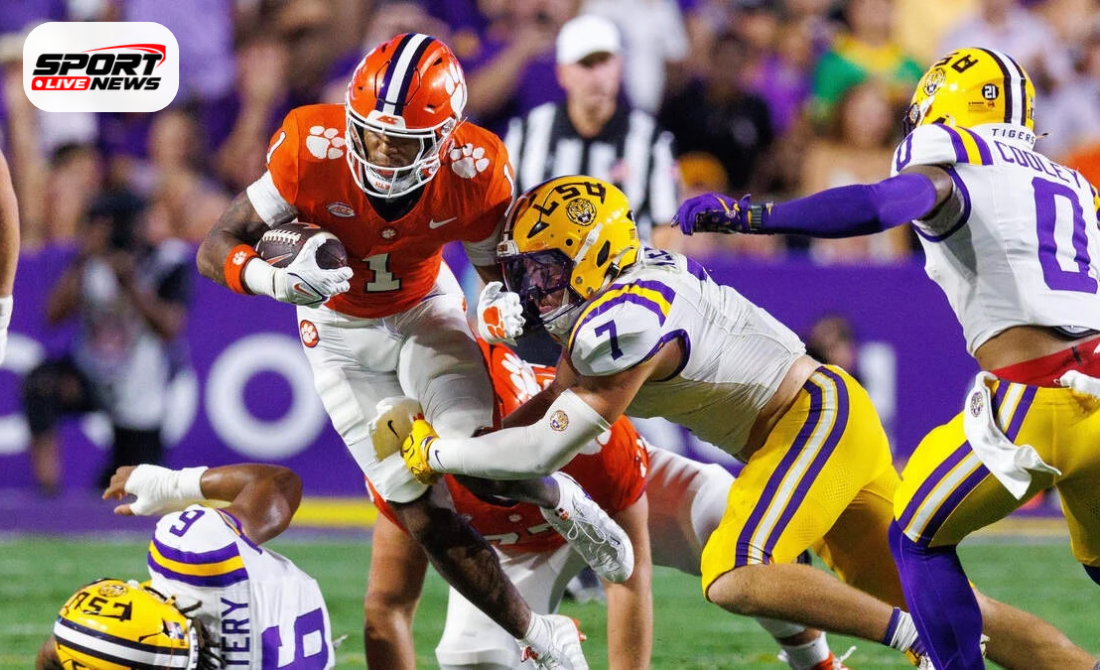
Clemson beat Troy 27–16 on September 6, 2025, recovering from a 16-point deficit at Memorial Stadium in Clemson, South Carolina. The Clemson vs Troy matchup turned when the Tigers scored 24 unanswered second-half points, with Bryant Wesco Jr. catching two touchdown passes. Both teams finished the game with 1–1 records for the 2025 season.
Instant Topic Verdict
- Final score: Clemson 27, Troy 16; the Trojans led 16–3 at halftime.
- Decisive swing: Clemson scored two touchdowns 58 seconds apart in the third quarter.
- Leading contributors: Adam Randall rushed for 112 yards, while Wesco recorded 118 receiving yards.
- Historical significance: The victory gave Clemson a 3–0 record against Troy.
Clemson vs Troy Final Score by Quarter
| Team | First quarter | Second quarter | Third quarter | Fourth quarter | Final |
|---|---|---|---|---|---|
| Troy Trojans | 7 | 9 | 0 | 0 | 16 |
| Clemson Tigers | 0 | 3 | 17 | 7 | 27 |
The quarter-by-quarter score shows the sharp reversal: Troy controlled the scoring before halftime, but Clemson shut out the visitors after the break.
How Troy Built Its Early Lead
Troy’s opening possession produced a 44-yard touchdown pass from Goose Crowder to Tray Taylor. The Trojans then combined defensive pressure with favorable field position to extend their advantage.
Luke Hodge forced an Adam Randall fumble, and Justin Powe’s 53-yard return helped set up a field goal. Later, Hodge deflected a pass that TJ Thompson intercepted and returned four yards for a touchdown.
Those plays explain why Troy’s lead was more than an early offensive burst. Its defense directly created scoring opportunities while restricting Clemson to 114 yards and three points in the first half.
Second-Half Highlights: Where the Game Changed
Randall Established the Comeback
Clemson opened the third quarter with a 75-yard touchdown drive. Randall supplied 59 rushing yards on six carries during that possession, finishing with a one-yard scoring run.
That sequence mattered because Clemson generated a sustained response before receiving help from its defense. The offense reduced the deficit through its own execution, then immediately benefited from a takeaway.
Interceptions Put Clemson Ahead
Ricardo Jones intercepted Crowder to give Clemson possession at Troy’s 26-yard line. On the next snap, Cade Klubnik connected with Wesco for the touchdown that put the Tigers ahead 17–16.
Ronan Hanafin intercepted another pass on Troy’s following possession. Clemson converted that opportunity into a field goal, extending the lead to 20–16. The two interceptions therefore produced 10 points without requiring long scoring drives.
Troy’s Failed Fake Field Goal Was Costly
Troy subsequently reached Clemson’s 22-yard line, creating an opportunity to respond. Instead, its fake field goal ended in a sack and a turnover on downs—meaning possession passed to Clemson after Troy failed on fourth down.
Seven plays later, the Tigers scored again. The sequence changed a four-point contest into an 11-point game and sharply reduced Troy’s room for another mistake.
Key Player Stats
The following figures cover the September 6, 2025 game only.
| Player | Team | Key statistics |
|---|---|---|
| Cade Klubnik | Clemson | 18/24 passing, 196 yards, 2 touchdowns, 1 interception |
| Adam Randall | Clemson | 21 carries, 112 rushing yards, 1 touchdown |
| Bryant Wesco Jr. | Clemson | 7 receptions, 118 yards, 2 touchdowns |
| Goose Crowder | Troy | 19/31 passing, 223 yards, 1 touchdown, 3 interceptions |
| Tae Meadows | Troy | 16 carries, 76 rushing yards |
Source: Clemson’s official game statistics.
Randall provided the volume in Clemson’s running game, while Wesco supplied the decisive receiving production. For Troy, Crowder’s passing yardage showed the offense could move the ball, but the interceptions limited the value of that production.
Why Clemson Won Despite a Close Yardage Battle
| Team statistic | Clemson | Troy |
|---|---|---|
| Total offense | 316 yards | 301 yards |
| Passing yards | 196 | 223 |
| Rushing yards | 120 | 78 |
| First downs | 17 | 16 |
| Possession time | 26:59 | 33:01 |
These figures show that Clemson did not overwhelm Troy in total yardage or possession. The Trojans had the ball longer, and the teams finished only 15 yards apart.
The stronger explanation is scoring efficiency at decisive moments. Clemson scored on five consecutive possessions across the second, third and fourth quarters, then used its final possession to exhaust the remaining 4:24. That sustained finish prevented Troy from regaining control.
From an analytical perspective, the difference was how the teams handled opportunities after halftime. Clemson paired productive possessions with takeaways; Troy’s promising field position ended without points on the failed fake. A close yardage total can conceal that kind of decisive difference.
What the Result Meant Historically
Clemson’s official game notes classified the recovery as its joint sixth-largest comeback at the time, matching the 16-point deficit overcome against Ohio State in the 2019 Fiesta Bowl. It was also the program’s third-largest comeback victory at Memorial Stadium.
The result extended Clemson’s unbeaten record in the series:
| Meeting | Result |
|---|---|
| September 3, 2011 | Clemson 43–19 Troy |
| September 10, 2016 | Clemson 30–24 Troy |
| September 6, 2025 | Clemson 27–16 Troy |
Troy’s official series history lists all three meetings in Clemson. The 2016 and 2025 results also demonstrate that an unbeaten head-to-head record did not make every matchup comfortable for the Tigers.
FAQs
Q1. What was the Clemson vs Troy halftime score?
Troy led 16–3 at halftime. Clemson then outscored the Trojans 24–0 across the final two quarters.
Q2. How large was Clemson’s comeback against Troy?
Clemson overcame a 16–0 deficit and scored the final 27 points. This was the seventh victory in program history after trailing by at least 16 points.
Q3. Has Troy ever beaten Clemson in football?
Troy lost all three meetings listed in its official series history through September 6, 2025. Clemson won in 2011, 2016 and 2025.
Conclusion
Clemson’s victory was a successful recovery built on better second-half execution. Troy created a genuine opportunity through its early defensive plays, but could not turn that advantage into a complete performance.
When assessing this game, the key questions are consistency and ball security: how reliably an offense sustains drives, and whether it protects possession when the opponent begins to respond. Those factors explain this result more clearly than total yardage alone.
