


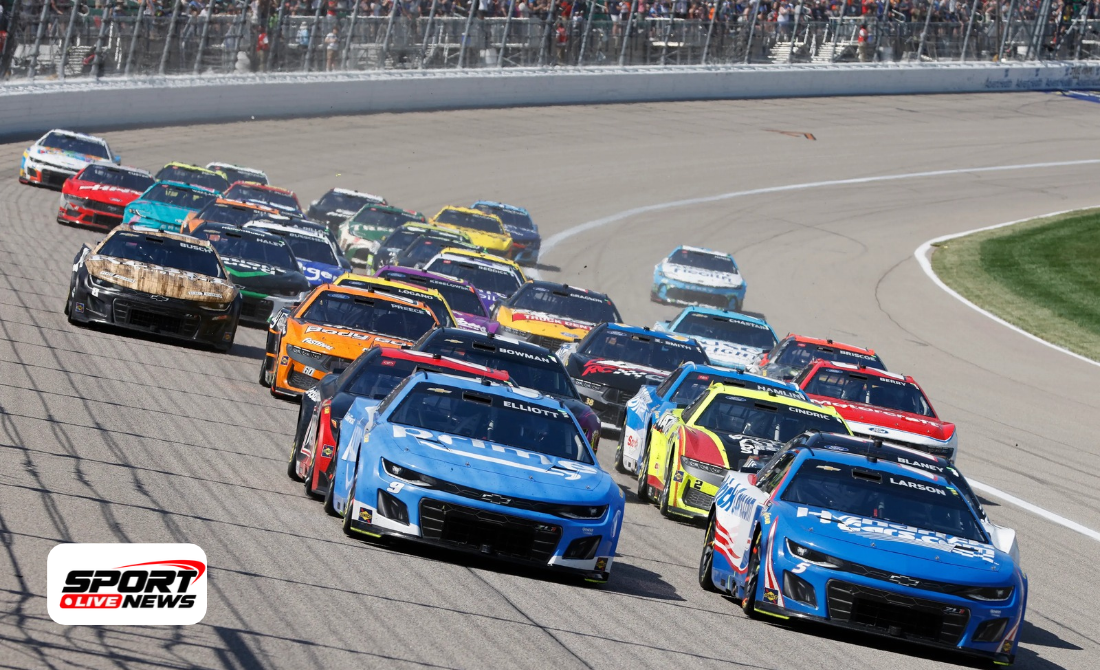
The Kyle Larson Daytona scoring changes story involves two important developments: NASCAR’s revised 2026 championship points system and changes to the recorded finishing order after the summer race at Daytona International Speedway. Larson’s official NASCAR statistics and the race report help explain why the scoring matters, but a revised finishing position should not be confused with a change to the championship rules.
Instant Topic Verdict
- New points system: NASCAR introduced a revised championship format for 2026, including 55 points for a race victory and a return to The Chase.
- Daytona scoring: Post-race reporting described changes to the recorded finishing positions following the summer race, including an adjustment involving Larson.
- Why it matters: Daytona results can influence regular-season standings, Chase qualification and the starting points for the championship finale’s 10-race phase.
- Key distinction: Race-result corrections and the championship points system are separate issues, even when both affect a driver’s standings.
What changed in Kyle Larson’s Daytona scoring?
The most specific reported scoring correction occurred during the August 29, 2026, Coke Zero Sugar 400 at Daytona. According to Beyond the Flag, NASCAR reviewed the order at the end of Stage 1 after a multi-car incident and corrected several drivers’ positions. Larson was initially scored outside the top 10, but the revised Stage 1 order moved him up to sixth.
That distinction matters: Larson’s move to sixth was a Stage 1 scoring correction, not a change to his final race finish. NASCAR’s official race report describes Larson spinning into the infield grass as Stage 1 ended. Its driver statistics separately record his Daytona results.
Daytona scoring correction at a glance
| Detail | What the reporting shows |
|---|---|
| Race | Coke Zero Sugar 400 |
| Date | August 29, 2026 |
| Initial Stage 1 position | Outside the top 10 |
| Revised Stage 1 position | Sixth |
| Main reason | Review of the order after a multi-car incident |
| Championship relevance | Stage points and regular-season standings |
Source: Beyond the Flag+1 The sixth-place position refers to Stage 1, not the final race classification.
Why Daytona timing and scoring can be complicated
Daytona is a high-speed superspeedway where cars frequently race in close groups. Drafting, contact between cars, spins and cautions can compress the field, making the precise order at a scoring line important.
When an incident happens near the end of a stage, officials may need to review the available timing and scoring information to establish the correct running order. A corrected position can change stage points and affect the championship picture, particularly when drivers are separated by only a few points.
In this case, Larson was not the only driver affected. The report also describes corrections involving Ryan Preece, Bubba Wallace, John Hunter Nemechek, Austin Hill and Alex Bowman.
The broader lesson is that a live leaderboard or an initial stage order should not automatically be treated as the final official record.
NASCAR’s 2026 points system explained
The Daytona correction happened under a new championship format. On January 12, 2026, NASCAR announced a return to The Chase, replacing the elimination-style postseason used in recent years. The revised system aims to reward both race victories and consistent performance across the season.
How the new scoring system works
The most important change is the value of a race victory. Under the 2026 rules, the winner earns 55 points rather than 40. The traditional stage points continue to contribute to the championship total, while the separate bankable playoff-point system has been removed.
| Scoring element | 2026 NASCAR Cup Series system |
|---|---|
| Race winner | 55 points |
| Second place | 35 points |
| Third place | 34 points |
| Fourth place | 33 points |
| Stage winner | 10 points |
| Second in a stage | 9 points |
| Third in a stage | 8 points |
The table highlights the principal values; it is not a complete list of every finishing position or eligibility rule.
The gap between first and second is now substantial. A victory can provide a major points advantage, but a driver cannot rely on one win alone to guarantee a postseason place.
Under the new format, the top 16 Cup Series drivers qualify for The Chase based on regular-season points. Winning a race no longer automatically secures a postseason berth. The championship is then decided by points accumulated across the final 10 races.
Why the change matters to Kyle Larson

Larson drives the No. 5 Chevrolet for Hendrick Motorsports and entered 2026 as a two-time Cup Series champion, having won titles in 2021 and 2025. His results therefore provide a useful example of how the revised system can reward sustained performance as well as victories.
For Larson, a scoring correction at Daytona and the overall points-system changes affect the championship in different ways:
- Stage scoring: A corrected Stage 1 position can alter the points credited for that segment.
- Race points: His final race position determines the finishing-position points awarded.
- Regular-season ranking: The combined points total helps determine postseason qualification and seeding.
- The Chase: Once the field is set, the points reset establishes each driver’s starting position for the final 10 races.
A stage correction does not mean NASCAR has changed the points rules. It means the officials have revised the result used to apply those rules.
What the Daytona scoring changes mean for the championship
The practical impact is clearest when looking at the drivers competing for postseason places. Ryan Preece entered the August race 31 points below the provisional Chase cut line and ultimately secured the final berth by 17 points over Shane van Gisbergen.
Larson’s Stage 1 correction was important to his segment score, but it did not turn his overall Daytona result into a top-10 finish. NASCAR’s official results list him 31st overall, with 16 points for the race.
This is why readers should check three separate records when following a NASCAR scoring story:
- Stage results: These establish the points awarded for each completed stage.
- Final race results: These show the driver’s official finishing position and associated points.
- Championship standings: These reflect the accumulated points and, where applicable, the postseason reset.
Confusing these records can lead to incorrect claims about a driver’s result or championship position.
How the 2026 Chase format affects Kyle Larson
NASCAR’s revised format makes regular-season consistency more important when determining who qualifies for the postseason. The top 16 Cup Series drivers enter The Chase based on points, after which the standings are reset according to seeding. The regular-season champion receives a 25-point advantage over the standard top-seed allocation.
The new system also gives greater weight to winning. A driver who wins a race receives 55 points, while second place earns 35. Stage points still count, but the previous bankable playoff-point system no longer applies.
For Larson and Hendrick Motorsports, the implication is straightforward: every stage and race can influence the points total, but the final championship position depends on performance over the full schedule and the 10-race Chase.
Does the scoring correction change Larson’s official record?
A correction to a stage order changes the record for that segment and can affect the points awarded. It does not automatically change a driver’s final finishing position or the championship rules.
For the August 2026 Daytona race, NASCAR’s official results should be used for Larson’s overall finish, while the reported Stage 1 correction explains why the segment leaderboard differed from its initial order.
FAQs
Q1. What were Kyle Larson’s Daytona scoring changes?
During the August 29, 2026, Coke Zero Sugar 400, Larson was initially scored outside the top 10 at the end of Stage 1. A subsequent review moved him to sixth in the corrected stage order.
Q2. Did Kyle Larson finish sixth at Daytona in August 2026?
No. Sixth was his corrected Stage 1 position, not his overall race finish. NASCAR’s official results list Larson in 31st place, earning 16 points in the race.
Q3. What changed in NASCAR’s points system for 2026?
NASCAR introduced a 55-point award for race victories, removed the automatic postseason berth for race winners and returned to The Chase. The Cup Series postseason includes the final 10 races, with the champion determined by total points at the end.
Conclusion
The Kyle Larson Daytona scoring changes story highlights the importance of accurate timing and scoring in NASCAR. Larson was moved to sixth in the revised Stage 1 order after initially being placed outside the top 10, but his official overall finish remained 31st in the August 2026 race.
Separately, NASCAR’s 2026 championship changes increased the value of race victories and restored The Chase. For readers tracking Larson’s points and title prospects, the most useful next step is to compare official stage results, final race classifications and updated championship standings rather than treating them as one record.
