


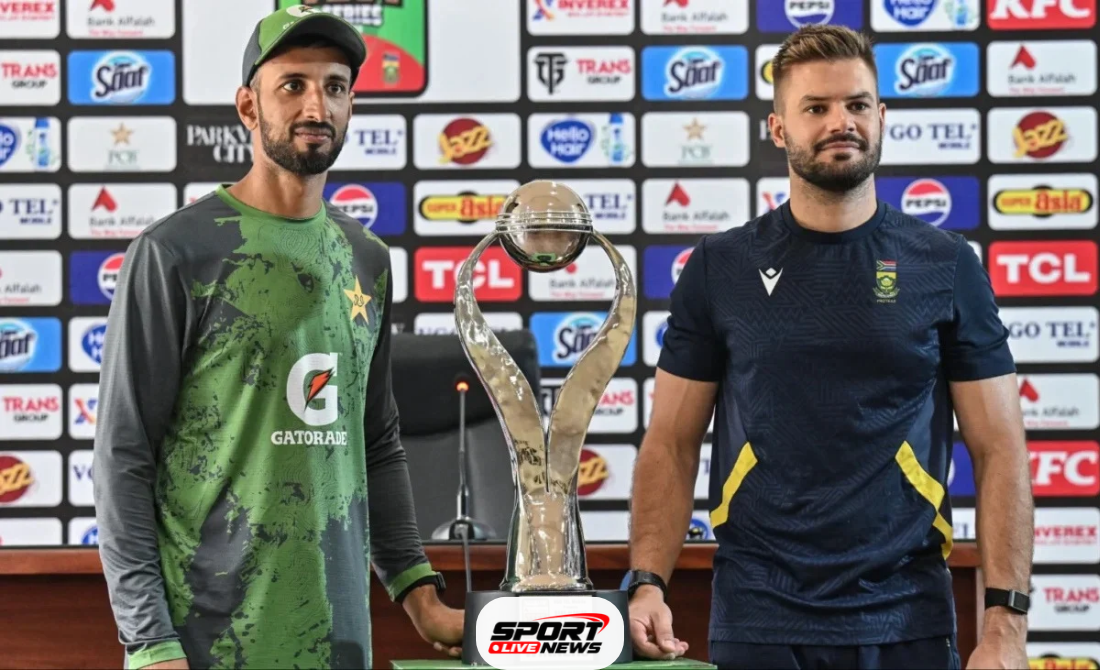
The pakistan national cricket team vs south africa national cricket team timeline began with an ODI at the 1992 World Cup, followed by their first Test in 1995 and first T20 international in 2007.
Through the completed November 2025 tour, South Africa led the Test and ODI head-to-head records, while Pakistan held a narrow T20I advantage. Their history includes World Cup knockout drama, one-run finishes and Pakistan’s breakthrough ODI clean sweep in South Africa.
Instant Topic Verdict
- Tests: South Africa led 18–7, with seven draws.
- ODIs: South Africa led 53–36, with one no-result.
- T20Is: Pakistan led 14–13.
- 2025 tour of Pakistan: The Test series finished 1–1; Pakistan won both limited-overs series 2–1.
Pakistan vs South Africa Head-to-Head Record
The following figures cover senior men’s internationals through 8 November 2025. They are a dated historical record, rather than a live results feed.
| Format | Matches | Pakistan wins | South Africa wins | Other results |
|---|---|---|---|---|
| Tests | 32 | 7 | 18 | 7 draws |
| ODIs | 90 | 36 | 53 | 1 no-result |
| T20Is | 27 | 14 | 13 | None |
The respective last-match dates within these totals are 23 October 2025 for Tests, 8 November 2025 for ODIs and 1 November 2025 for T20Is.
The difference between formats matters. South Africa’s substantial Test advantage describes a long-term record, while the T20I figures show a much more evenly matched contest. Neither should be treated as a prediction for an individual game.
How the Rivalry Began: 1992–2007
| Date or period | Milestone | Result |
|---|---|---|
| 8 March 1992 | First ODI meeting, Brisbane World Cup match | South Africa won by 20 runs after a revised target |
| January 1995 | First Test meeting, Johannesburg | South Africa won by 324 runs |
| February–March 1998 | Pakistan’s first Test victory against South Africa, Durban | Pakistan won by 29 runs |
| October 2003 | Pakistan’s first Test series win against South Africa | Pakistan won the home series 1–0 |
| 2 February 2007 | First T20I meeting, Johannesburg | South Africa won by 10 wickets |
These milestones show how the rivalry expanded from tournament cricket into regular competition across all three international formats.
Key Matches That Shaped the Timeline
2009: Shahid Afridi Changes a World Cup Semi-Final
Pakistan defeated South Africa by seven runs at Trent Bridge on 18 June 2009, securing a place in the World Twenty20 final.
Shahid Afridi supplied the decisive all-round performance: 51 from 34 balls followed by bowling figures of 2/16. Pakistan defended 149/4, restricting South Africa to 142/5.
The tactical significance was Afridi’s contribution in two separate phases. His batting helped establish a defendable score, while his dismissals of Herschelle Gibbs and AB de Villiers interrupted South Africa’s pursuit. This was a match in which wicket-taking through the middle overs mattered as much as the final-over defence.
2013: Two One-Run Results, Opposite Outcomes
On 30 October 2013, South Africa defended 183 in Sharjah to win by one run. Pakistan lost their final six wickets for 17 runs, turning a manageable chase into a defeat.
Less than a month later, Pakistan reversed the outcome. Their one-run victory at Port Elizabeth on 27 November secured an unassailable 2–0 lead in a three-match ODI series.
Ahmed Shehzad’s century helped Pakistan reach 262 in a rain-shortened, 45-over match. South Africa finished on 261/6 despite major contributions from Hashim Amla and AB de Villiers.
Together, these games illustrate why the final margin can conceal very different stories: one was a batting collapse, the other a successful defence under intense late pressure.
2015: Pakistan Win a Rain-Affected World Cup Meeting
Pakistan beat South Africa by 29 runs under the Duckworth–Lewis method at Auckland on 7 March 2015.
Pakistan made 222, with Misbah-ul-Haq scoring 56 and Sarfaraz Ahmed contributing 49. Sarfaraz was named player of the match. The rain-adjusted result is important when reading the scorecard: the winning margin was calculated against the revised target, rather than simply by subtracting the two innings totals.
2022: Shadab Khan Leads a Powerful Recovery
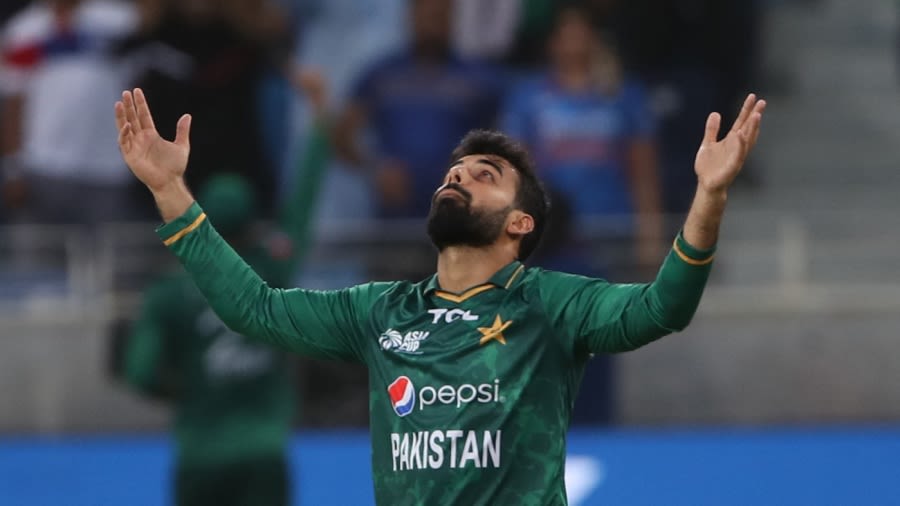
At the Sydney Cricket Ground on 3 November 2022, Pakistan recovered from 43/4 to reach 185/9 before winning by 33 runs under the Duckworth–Lewis–Stern method.
Iftikhar Ahmed scored 51 from 35 deliveries, while Shadab Khan accelerated with 52 from just 22. Their sixth-wicket partnership added 82 runs, transforming Pakistan’s innings.
Shadab then contributed two wickets. The performance underlined the value of batting depth: South Africa had removed the top order cheaply, but Pakistan still had enough attacking ability to produce a competitive total. DLS is the method used to adjust targets when weather reduces playing time.
2023: South Africa Survive a Chennai Thriller
South Africa won by one wicket in Chennai on 27 October 2023, reaching 271/9 after bowling Pakistan out for 270.
Aiden Markram’s 91 provided the foundation, but Pakistan’s late wickets pushed the match into a tense finish. Keshav Maharaj and Tabraiz Shamsi ultimately completed the chase.
The result offers a useful distinction between controlling a chase and finishing it. Markram carried much of the scoring burden, but South Africa still needed their final pair to turn that work into victory.
December 2024: Pakistan Complete a Historic ODI Sweep
Pakistan won all three ODIs in South Africa in December 2024, becoming the first visiting team to whitewash South Africa in a men’s ODI series on South African soil.
The final victory came at Johannesburg on 22 December, when Pakistan won by 36 runs in a rain-affected contest. Saim Ayub scored his second century of the series, while debutant Sufyan Moqim took 4/52.
This was more significant than a single upset. Repeated contributions across three matches demonstrated that Pakistan could sustain winning performances in away conditions, despite trailing the overall ODI head-to-head record.
The 2025 Tour: Shared Test Honours, Pakistan’s Limited-Overs Success
South Africa’s October–November 2025 visit produced a different winner in each Test, followed by Pakistan victories in both white-ball series.
| Series | Final result | Decisive result |
|---|---|---|
| Two Tests | Drawn 1–1 | South Africa won the second Test by eight wickets |
| Three T20Is | Pakistan won 2–1 | Pakistan won the third T20I by four wickets |
| Three ODIs | Pakistan won 2–1 | Pakistan won the third ODI by seven wickets |
Pakistan won the opening Test in Lahore by 93 runs before South Africa responded in Rawalpindi. In the T20I decider, Babar Azam’s 68 from 47 balls helped Pakistan chase 140.
Why the ODI Decider Turned
The third ODI at Faisalabad on 8 November 2025 provides a clear example of how wickets can overturn a promising start.
South Africa’s openers added 72, but Pakistan’s spinners dismantled the innings. Abrar Ahmed took four wickets, while Salman Ali Agha and Mohammad Nawaz also made important breakthroughs. South Africa were dismissed for 143, and Pakistan completed the chase with seven wickets and 149 balls remaining.
The key was Pakistan’s ability to keep taking wickets after breaking the opening partnership. That prevented South Africa from rebuilding and left the hosts with a modest target.
FAQs
Q1. When did Pakistan and South Africa first play international cricket against each other?
Their first men’s international meeting was an ODI at Brisbane on 8 March 1992, during the World Cup. South Africa won by 20 runs after a revised target.
Who leads the Pakistan vs South Africa head-to-head record?
Through 8 November 2025, South Africa led Tests 18–7 and ODIs 53–36. Pakistan led T20Is 14–13. crictotal.com
Has Pakistan whitewashed South Africa in an ODI series?
Yes. Pakistan won the December 2024 away series 3–0, becoming the first visiting team to complete a men’s ODI series whitewash in South Africa.
Conclusion
This rivalry has two distinct features: South Africa’s stronger historical Test and ODI records, and Pakistan’s capacity to win major tournament matches and important bilateral series.
The next useful comparison will be whether Pakistan can sustain their ODI progress and whether either side can establish a clearer T20I advantage. Future results should be assessed alongside venue, team selection and format—not the overall head-to-head total alone.
You May Also Read This: Cricket match reports and results
